What does the 2024 BC Building Code require?
For building permits applied for on or after March 8, 2024, every new house and small residential building in BC needs a rough-in for a subfloor depressurization system, according to the province's bulletin B24-03. Before that, only listed higher-radon areas needed one. The 2024 code dropped the exemptions because newer data showed elevated radon in places it was not expected. A compliant rough-in has four parts:
- A gas-permeable layer under the slab, such as 100 mm of clean coarse gravel, so soil gas can move toward the pipe.
- A continuous, sealed air barrier between that layer and the living space.
- A radon vent pipe with a 100 mm inside diameter, labelled as a radon pipe along its length and run through to the outdoors.
- Room around the pipe to fit a fan later; the bulletin suggests a space about 1.2 m high and 500 mm across, and a nearby electrical outlet, which is helpful but not required.
What doesn't the code require?
The bulletin is clear on two points owners often miss. The code does not require an active system with a fan. And once the house is occupied, the code no longer applies, so there is no code requirement to test; testing is the owner's responsibility. Crawl spaces are a partial exception to the rough-in rule itself: an unheated, vented crawl space with the air barrier on the underside of the floor above does not need one.
Why isn't the pipe alone enough?
A rough-in is the start of a mitigation system. Interior Health's guide for new homes says having the pipe 'does not mean you have a functioning radon mitigation system'. Without a fan, the pipe vents passively, relying on warm air rising through it. BC Lung's 2023 community report says a passive system built into new construction can lower levels by 50% or more, and that adding a fan almost always brings them under 100 Bq/m³.
Plenty of rough-ins are not good passive systems. In a 2022 field study of 89 homes in BC's Central Interior, BC Lung found the vast majority had significant flaws: the wrong fill under the slab, pipes with bends and horizontal runs, uninsulated attic sections, gaps in the foundation, and pipes placed where no fan could fit. That study looked at homes built under the earlier code. A mitigator interviewed by The Tyee in January 2026 still described rough-ins as usually built wrong. Even the province had to correct its own code notes, which showed a capped pipe; the bulletin says the pipe must run to the outdoors.
When should you test, and when does a fan make sense?
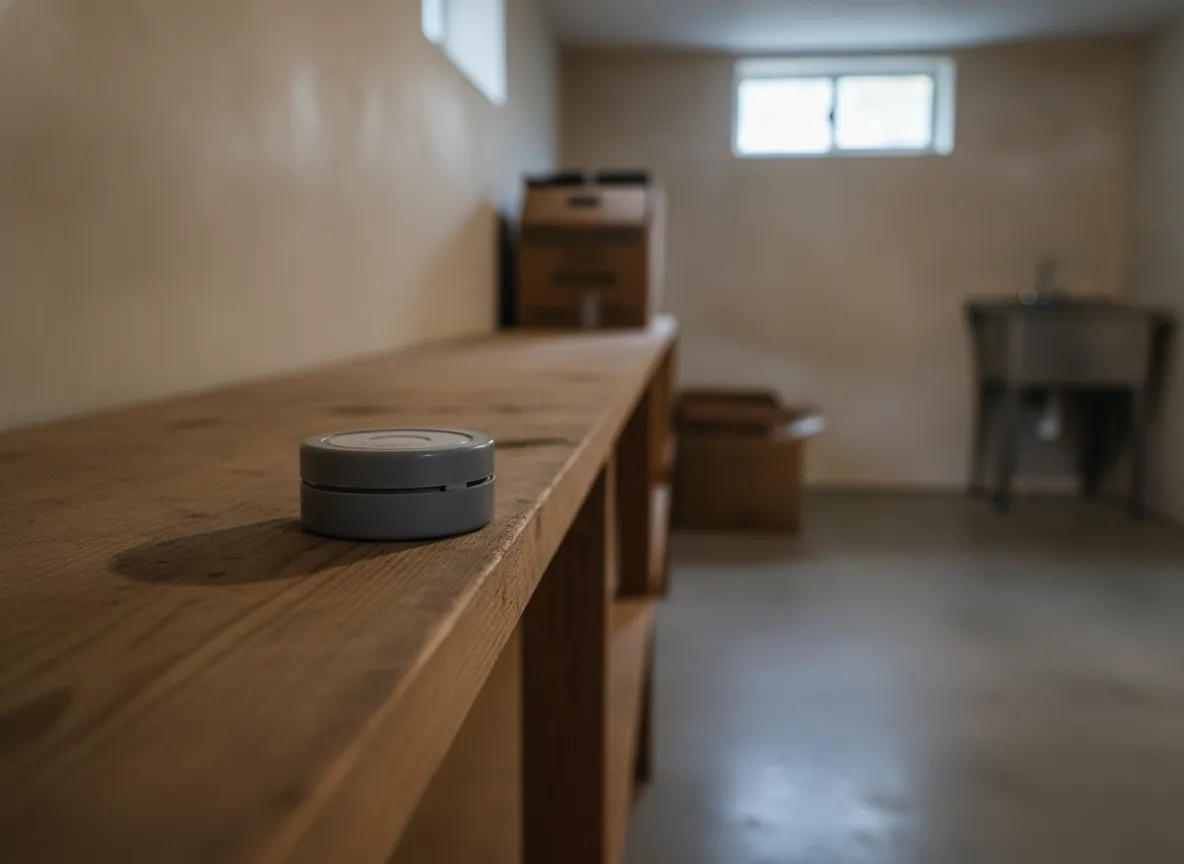
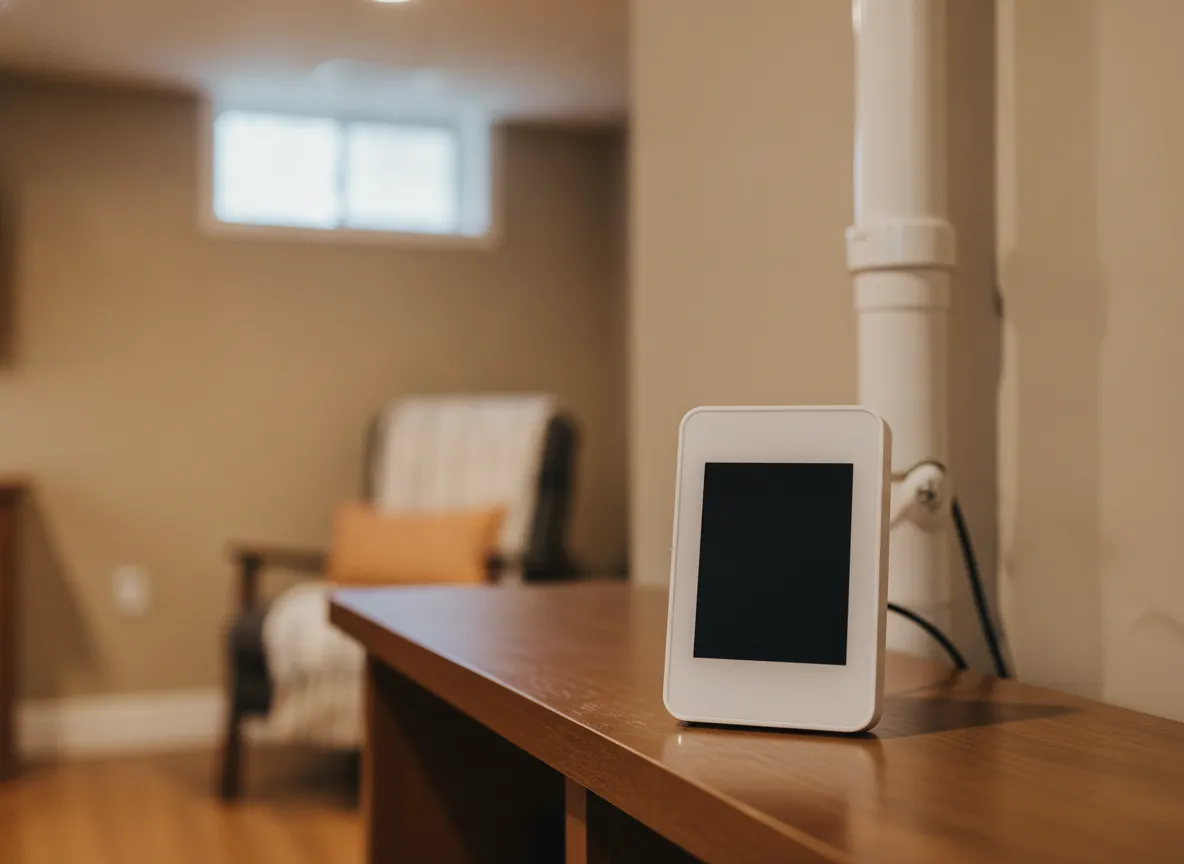
Test first. Interior Health recommends a long-term test of at least 91 days during the first heating season after you move in, in the lowest level used four or more hours a day. Newness is no reason to skip it: researchers cited by The Tyee found newer, tighter, energy-efficient homes can trap radon and show some of the highest levels. Then read the result against the guideline:
- 200 Bq/m³ or more: Health Canada recommends reducing it within a year. Activating the rough-in is usually the first fix to try.
- 100 to 199: within the guideline, but no level is considered risk free, and the World Health Organization uses 100 as its action level (Interior Health). A fan is a reasonable choice here, not an obligation.
- Under 100: leave the system passive, and retest every five years or after major renovations (Health Canada).
The order matters: a fan added before a test has no baseline to prove itself against, and you may be running one you never needed.
What does rough-in activation involve?
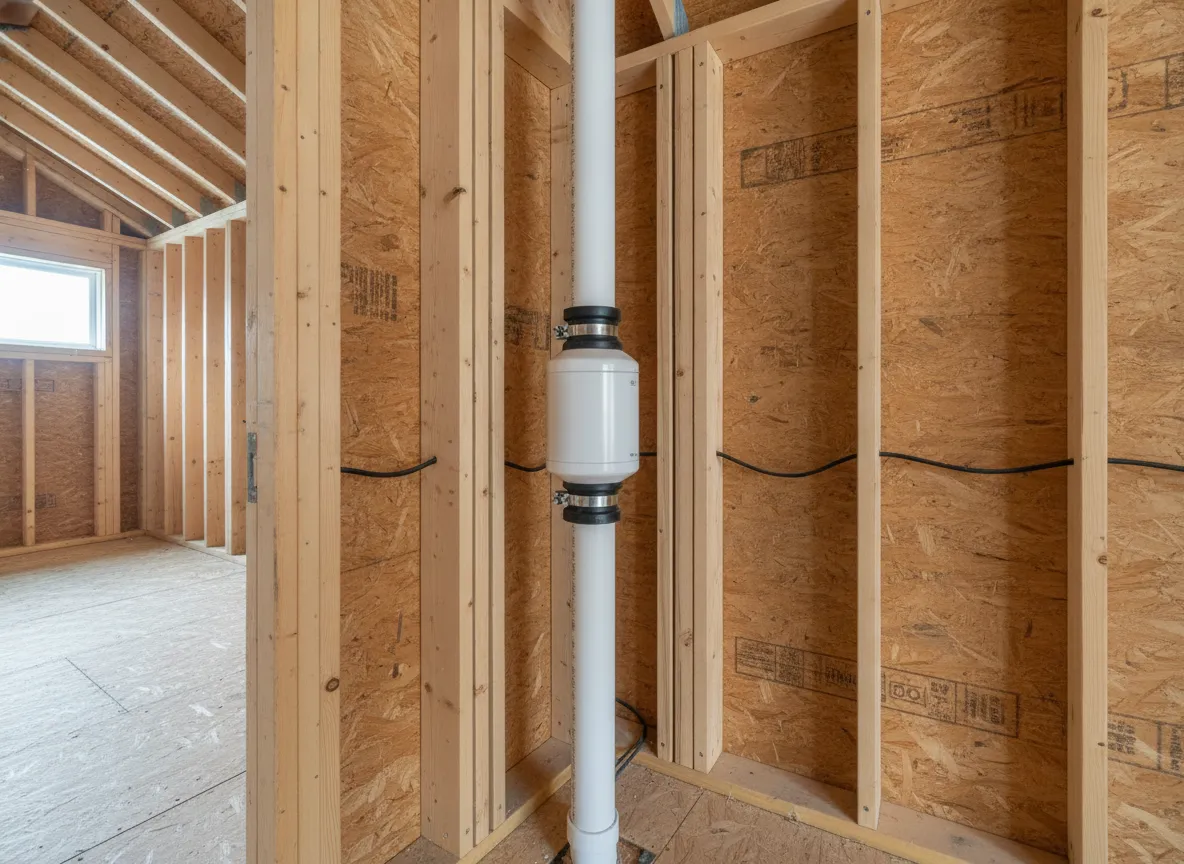
Activation turns the passive pipe into an active sub-slab depressurization system: a fan creates gentle suction under the slab and pushes soil gas outdoors, clear of windows. In outline:
- Check the rough-in. Find the pipe, confirm it is the radon pipe, follow its route and look for the flaws BC Lung found common: wrong fill, sags, open joints, uninsulated attic runs.
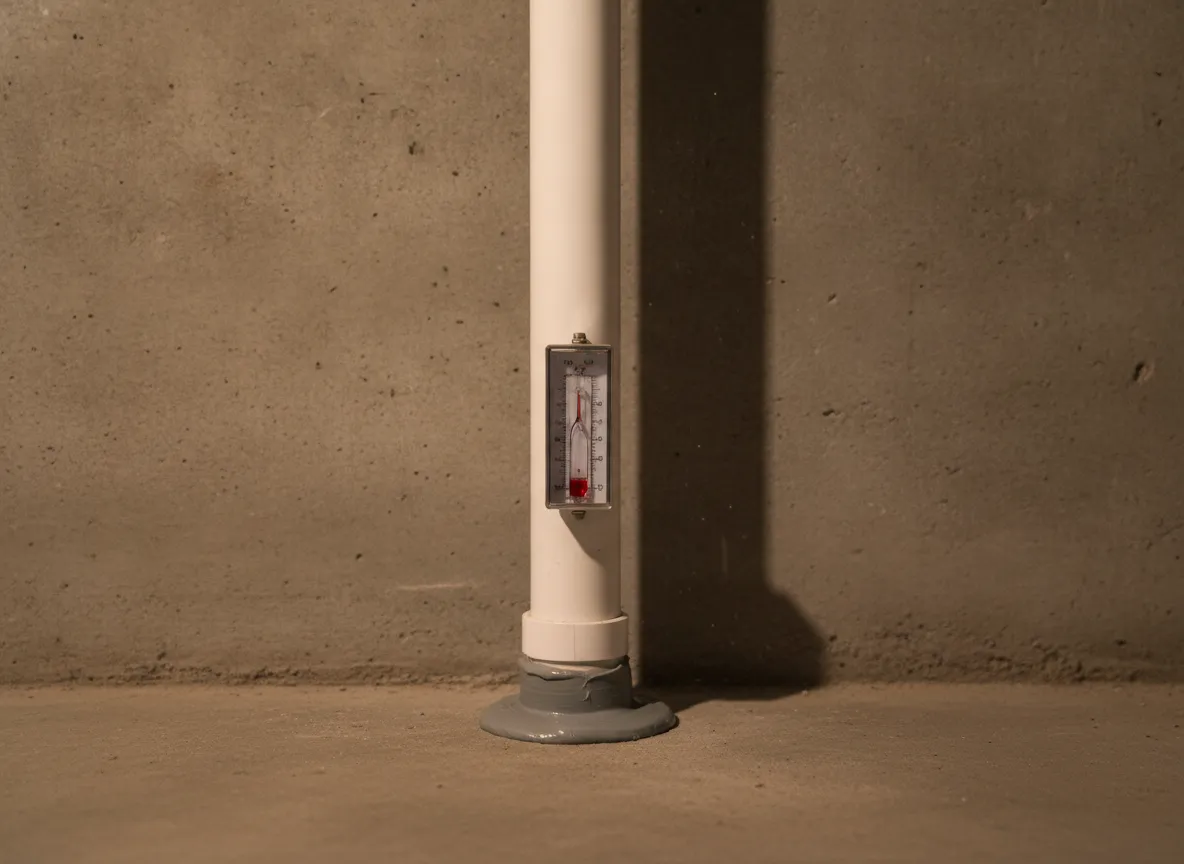
- Measure suction. A manometer, a sensitive pressure gauge, shows whether a fan can pull air from the whole gravel layer, including areas split off by footings.
- Size and mount the fan. The bulletin says the fan should sit as close to the outdoor exhaust as practical, so little pressurized pipe runs through living space. Size matters: BC Lung reports fan choices can differ by hundreds of watts, and an oversized fan pulls heated air out of the house.
- Seal and finish. Seal slab cracks, the sump lid and pipe penetrations, and keep the exhaust at least 3 m from windows and air inlets, as the bulletin advises.
- Retest. A long-term test in the next heating season, in the same spot as the first, is the proof the system works.
What does activation cost?
With a well-built rough-in, The Tyee puts it at about $1,500 for a simple one-day job. When the rough-in has to be repaired before it can be finished, the price rises; mitigators told BC Lung that fixing someone else's rough-in can cost as much as starting fresh. If you might apply for the Lung Association grant, apply before any work: it cannot pay for finished work and needs a quote from a C-NRPP certified mitigator.
If your test is back over 200 Bq/m³, send the result through the quote form and we will look at your rough-in activation. If you have not tested yet, start with a long-term radon test. The cost page covers older homes without a rough-in.
Questions we hear
Is a radon rough-in the same as a mitigation system?
No. A rough-in is a gas-permeable layer under the slab and a sealed pipe to the outdoors, ready for a fan. Without the fan it vents passively, and Interior Health says having the pipe does not mean you have a functioning radon mitigation system. A long-term test of at least 91 days tells you whether the passive pipe is enough or a fan is needed.
How much does it cost to add a fan to a radon rough-in?
The Tyee (January 2026) puts a simple one-day activation at about $1,500 when the rough-in is well built. Rough-ins that need repair cost more, and mitigators told BC Lung that fixing a flawed rough-in can cost as much as a new system. Test first: a fan only makes sense once a long-term result shows you need one.
Sources (8)
- Government of BC: Information Bulletin B24-03-R, Radon Rough-in Requirements (accessed 2026-11-17)
- Interior Health: Radon in Your New Home (September 2024) (accessed 2026-11-17)
- BC Lung Foundation: Radon in BC, Does Your Community Need to Test? (Report on Radon Community Testing, 2023) (accessed 2026-11-17)
- BC Lung Foundation: Radon and the BC Building Code, Assessing Implementation (November 2022) (accessed 2026-11-17)
- The Tyee: Homeowners Left on Their Own to Deal with Deadly Gas (January 2026) (accessed 2026-11-17)
- Health Canada: Radon guideline (accessed 2026-11-17)
- Health Canada: Reduce radon in your home (factsheet, 2026) (accessed 2026-11-17)
- Canadian Lung Association: Lungs Matter, Radon Mitigation Support (accessed 2026-11-17)