
Where do these answers come from?
Health figures come from Health Canada, Take Action on Radon and Interior Health. Local data comes from BC Lung's community testing report, prices from The Tyee's January 2026 reporting, and building rules from the province's code bulletin B24-03. Where two sources disagree, the answer says so instead of picking the convenient one. For more depth, see radon testing, mitigation costs and the grant page, or ask your own question on the quote form.
Questions we hear
What does Bq/m³ mean, and what level is too high?
Bq/m³ means becquerels per cubic metre: how many radon atoms decay each second in a cubic metre of air. Canada's guideline is 200 Bq/m³, averaged over a long-term test of at least 91 days. At or above it, Health Canada's guideline page says to reduce it within one year. Some summaries, including BCFSA's, still show a two-tier timeline: within two years for results between 200 and 600. No level is considered risk free.
How serious is radon for my family?
Radon is the leading cause of lung cancer in people who do not smoke and the second leading cause overall (Interior Health). Take Action on Radon puts lifetime lung cancer risk at about 1% for non-smokers living under 100 Bq/m³ and 2% at 200 to 599, against 12% and 17% for smokers. The harm builds over years of exposure, so a high result calls for a planned fix within months, not panic tonight.
Is this medical advice?
No. Everything on this site is general information. Health Canada's guideline and Take Action on Radon's risk figures describe populations, not you. If you are worried about radon exposure and your health, especially if anyone in the home smokes or has smoked, talk to your doctor. We can measure the radon in your home and reduce it. We cannot assess your health.
How much does radon mitigation cost in BC?
Typically $1,500 to $4,000 in BC, more for crawl spaces or complex older homes (The Tyee, 2026; BC Lung). A newer home with gravel under the slab and a rough-in already in place sits at the low end: about $1,500 for a simple one-day job. We do not publish a price for our own work because it depends on the house. See the cost page for what moves the number.
How much does a radon test cost?
Long-term kits run $50 to $200 depending on provider (The Tyee, 2026), and BC Lung's own kits start from about $50. BC Lung also lends kits through public libraries, but The Tyee reports those loans last four weeks, short of the three-month standard. If you would rather we place and collect the test, ask on the quote form.
Does BC pay for radon testing or mitigation?
No. BC has no provincial program for either. The Ministry of Health funded BC Lung's RadonAware initiative until 2017 and has offered homeowners nothing since (The Tyee, 2026). Other provinces do more: Saskatchewan offers a tax credit and Manitoba interest-free loans. In BC the main help is the Canadian Lung Association grant, which is national and has limited funding.
How does the Lung Association radon grant work?
The Lungs Matter program pays up to $1,500 toward mitigation. In BC, household income must be no more than $102,500, or the applicant must have a lung cancer diagnosis. You need a long-term test of at least 90 days from a C-NRPP certified test kit showing over 200 Bq/m³, plus a quote from a C-NRPP certified mitigator. It cannot pay for finished work and funding is limited, so confirm current intake on lung.ca. More on our grant page.
How can I tell if a radon contractor is certified?
Ask for their C-NRPP number and look it up in the directory at c-nrpp.ca. C-NRPP is the Canadian National Radon Proficiency Program, which Health Canada recommends. BC Lung says no BC rule limits who may install radon systems, so anyone can offer the work. The grant only accepts a quote from a C-NRPP certified mitigator, so check the number before you rely on any quote, ours included.
What is the difference between a short-term and a long-term radon test?
A short-term test runs from a few days up to 90 days. A long-term test runs 91 days or more, ideally through fall and winter when radon peaks. Radon swings with weather and season, so only the long-term average tells you whether you are over the guideline. BCFSA's summary of Health Canada guidance says short-term results should not decide whether to mitigate and should be followed by a long-term test in the same spot.
Do digital radon monitors count?
Partly, and the sources disagree. Interior Health accepts an electronic monitor run for at least 91 days as a long-term test. BCFSA's summary of Health Canada guidance recognizes only alpha-track and electret detectors for deciding on remediation, and the grant asks for a C-NRPP certified test kit. Our view: a monitor is good for watching trends, and a lab-analysed long-term kit is the safer basis for spending money or applying for the grant.
My neighbour tested low. Do I still need to test?
Yes. Interior Health says homes next to each other can have vastly different radon levels, and the province's code bulletin says the level in a finished house cannot be accurately predicted. Your slab, crawl space, sump, renovations and the way your furnace and fans move air all differ from next door. A neighbour's high result is a good reason to test. A neighbour's low result is no reason to skip it.
We are buying or selling. Is there time for a proper test?
Usually not. A long-term test takes at least 91 days, far longer than the time most buyers have to remove subjects. A short test or monitor reading during the sale is a screening snapshot, useful as a flag but not a basis for deciding on mitigation. Sellers who want a real answer can test through fall or winter before listing. Our guide covers the options: radon tests when buying or selling in BC.
Does a BC seller have to test for radon or disclose it?
No law requires a radon test (Interior Health, citing BCFSA). But BCFSA treats a level over 200 Bq/m³ as a material latent defect: a seller's agent who knows of one must disclose it before an agreement. Interior Health adds that a seller asked about radon must answer truthfully or acknowledge refusing to answer. This is general information. Ask your realtor or lawyer how it applies to your sale.
My new home has a radon pipe. Do I still need a fan?
Maybe. New BC homes permitted from March 2024 must have a rough-in: a gas-permeable layer under the slab and a sealed pipe ready for a fan. The code requires neither the fan nor a test, and Interior Health says a rough-in is not a working mitigation system. Test for at least 91 days in your first heating season. If the result is over 200 Bq/m³, we add the fan. See rough-in activation.
Is radon worse in a basement or a crawl space?
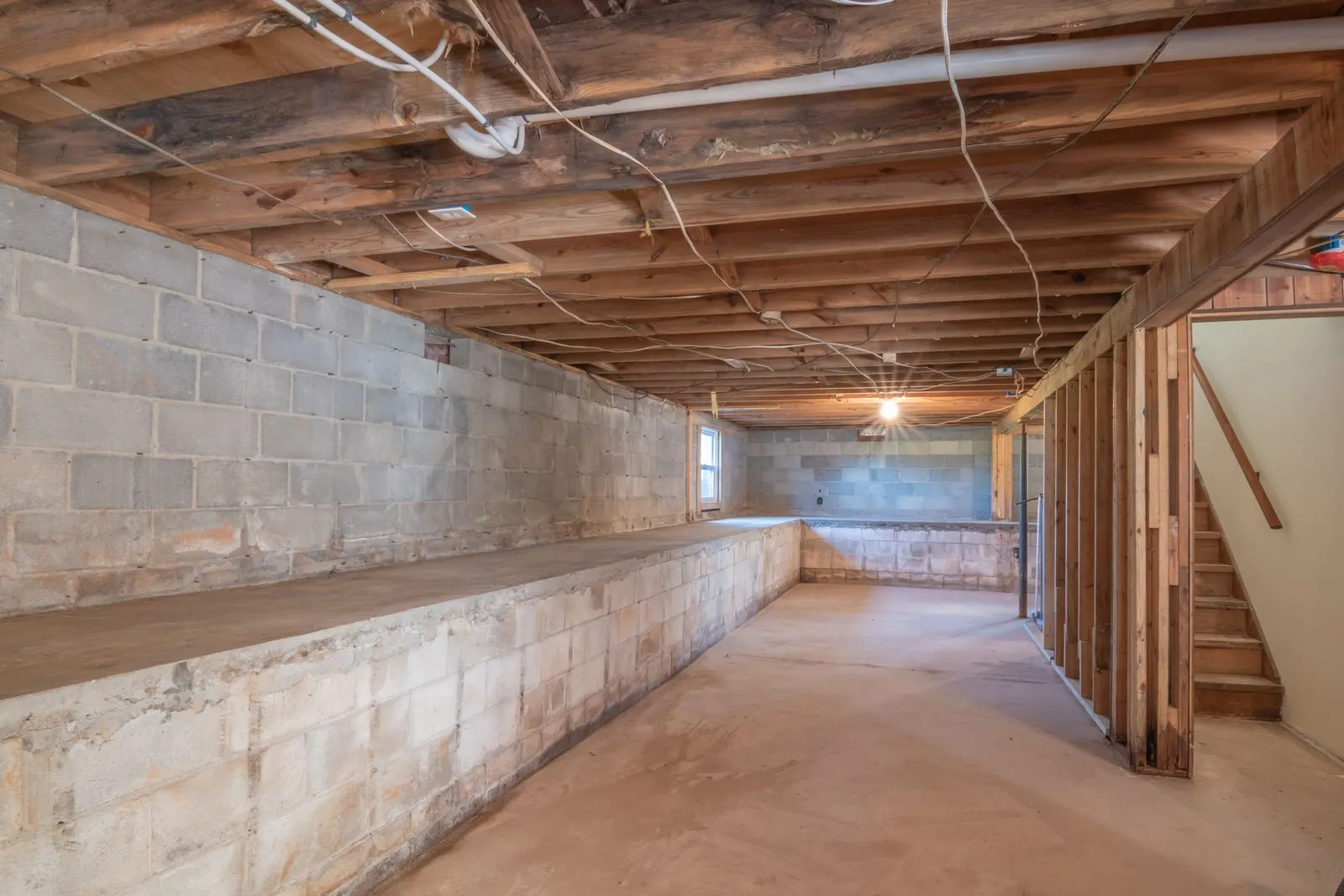
Radon usually builds up most at the lowest level of a home, so basements tend to read higher than upper floors (BCFSA, Interior Health). A crawl space over bare ground is an open path for soil gas into the floor above. Test in the lowest level you use four or more hours a day, not inside the crawl space itself. Crawl space homes often need a sealed membrane with suction under it, which costs more than a simple slab system.
We are on well water. Does that change anything?
It can. Researchers cited by The Tyee link rural reliance on groundwater wells to higher radon exposure. Radon in water escapes into the air when the water is agitated, as in a shower, and BC Lung says breathing radon is a bigger risk than drinking it. Test the air first with a long-term test. We test and reduce radon in indoor air. We do not do water treatment.
How long does installing a radon system take?
Most installs take about a day. Interior Health says the work can generally be completed within a day, and The Tyee describes a simple job in a newer home with a rough-in as a one-day job. Older homes, crawl spaces and slabs split by footings take longer. Before installing, we check how air moves under the slab with small test holes and a pressure gauge called a manometer, which shows where the suction point should go.
How often should I retest for radon?
After mitigation, run a long-term test in the first heating season, in the same spot as your original test (Health Canada). After that, Health Canada says every five years, and Interior Health suggests every three to five. Retest sooner after renovations, new windows, added insulation, a finished basement or a new furnace or HRV (heat recovery ventilator), because each one changes how air moves. Our retesting page explains the process.
Can I fix radon myself?
You can, and some homeowners do; Interior Health notes a skilled handy person following Health Canada guidance can do the work. The risks are real: an oversized fan can backdraft carbon monoxide from a water heater or fireplace into the house (The Tyee, 2026). The Lung Association grant also requires a quote from a C-NRPP certified mitigator, so a do-it-yourself system gets no grant money. For most households, a professional install is the safer route.
How do I reach you, and how fast will you reply?
Use the quote form; it is the only way to reach us. We reply by email within one business day. Include your town, whether the house has a basement, a crawl space or both, and any test result you already have, including the device type and dates. That lets us give you a useful answer the first time instead of a list of questions.
Sources (14)
- Health Canada: Radon guideline (accessed 2026-11-17)
- Health Canada: Reduce radon in your home (factsheet, 2026) (accessed 2026-11-17)
- Take Action on Radon: Creston 100 Radon Test Kit Challenge community report (August 2026) (accessed 2026-11-17)
- Interior Health: Take steps to test for radon today (accessed 2026-11-17)
- Interior Health: What to do if you have high levels of radon in your home (January 2025) (accessed 2026-11-17)
- Interior Health: Radon in Your New Home (September 2024) (accessed 2026-11-17)
- BC Lung Foundation: Radon in BC, Does Your Community Need to Test? (Report on Radon Community Testing, 2023) (accessed 2026-11-17)
- BC Lung: RadonAware frequently asked questions (accessed 2026-11-17)
- BC Lung Foundation: Radon and the BC Building Code, Assessing Implementation (November 2022) (accessed 2026-11-17)
- The Tyee: Homeowners Left on Their Own to Deal with Deadly Gas (January 2026) (accessed 2026-11-17)
- Canadian Lung Association: Lungs Matter, Radon Mitigation Support (accessed 2026-11-17)
- BC Financial Services Authority: Radon Precautions Information (accessed 2026-11-17)
- Government of BC: Information Bulletin B24-03-R, Radon Rough-in Requirements (accessed 2026-11-17)
- C-NRPP: Professional directory (accessed 2026-11-17)